Samsung’s HiMAE Model Brings Sub-Millisecond AI Directly to Smartwatches
Processing continuous physiological data from smartwatches usually requires a constant round trip to the cloud. Every heartbeat waveform, temperature check, and movement metric is packed up, sent across the network, and processed on remote servers before a health insight appears on your wrist. Samsung Research is challenging that model with new lightweight AI architectures designed to run entirely on wearable hardware.
The Bottleneck of Cloud-Based Health AI
As wearables have added advanced sensors—such as electrocardiograms (ECG) and photoplethysmography (PPG)—the volume of biometric data generated every second has exploded. Transmitting raw signal streams to cloud servers introduces latency, drains battery life, and creates privacy concerns for users hesitant to upload biological data to offsite datacenters.
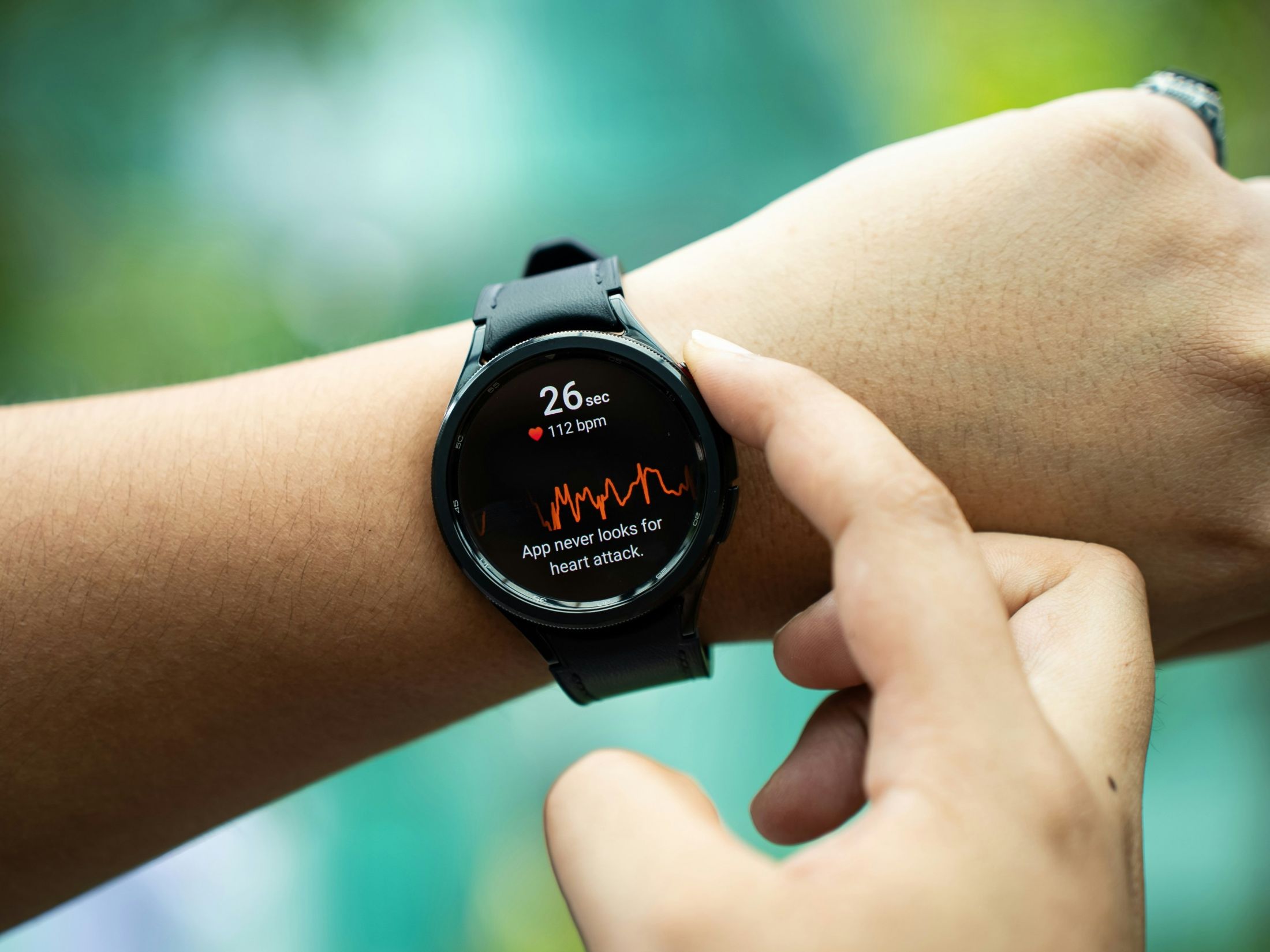
To address these limitations, researchers have focused on edge computing: shrinking foundation models so they can execute complex inferences directly on low-power microprocessors.
How HiMAE Delivers On-Device Inference
Samsung Research revealed two foundation models accepted at top AI conferences: HiMAE (Hierarchical Masked Autoencoder) and xMAE.
Raw PPG/ECG Signals ➔ On-Device HiMAE Model ➔ Local Health Insights (<1ms)
HiMAE is engineered to analyze multi-scale biosignals natively on smartwatch CPUs. By training on unlabeled physiological data, the model learns complex biometric representations without requiring massive supervised datasets. Crucially, HiMAE achieves inference times of less than one millisecond on smartwatch-class hardware, eliminating network dependency and significantly reducing processing overhead.
The second model, xMAE, uses synchronized ECG and optical PPG signals during training to learn how cardiac electrical activity relates to blood volume changes. Once trained, the ECG component can be stripped away, leaving a compact PPG encoder capable of high-accuracy health monitoring using standard optical wrist sensors.
Why Local Processing Matters for the Edge Ecosystem
For mobile and embedded software developers, Samsung’s research proves that foundation models aren’t restricted to cloud datacenters. Operating at sub-millisecond speeds on ultra-low-power chips unlocks real-time monitoring capabilities—like instant cardiac anomaly detection—that were previously impractical due to latency constraints.
From a system architecture standpoint, executing inference locally preserves battery capacity by reducing cellular and Bluetooth transmission. It also simplifies compliance with regional data protection standards by keeping sensitive biometric signals on the device.
My Take: The Right Path for Wearable AI
This is where consumer AI needs to go. While cloud-based LLMs get most of the headlines, running localized, task-specific models on edge hardware delivers much more practical value for daily computing.
If Samsung successfully transitions these models from research papers into production Galaxy Watch software, it sets a high bar for the industry. Eliminating cloud latency while keeping raw physiological data stored locally is a winning combination for performance and user privacy.
Frequently Asked Questions
Is HiMAE available on current Samsung Galaxy Watches today?
No, HiMAE and xMAE are research developments from Samsung Research America. Samsung has not officially announced when these specific architectures will roll out to commercial devices.
How does on-device AI improve smartwatch battery life?
Transmitting raw sensor data over Bluetooth or Wi-Fi consumes significant power. Running lightweight inference locally reduces the frequency of wireless transmissions, conserving battery.
What is the difference between PPG and ECG sensors?
PPG (photoplethysmography) uses light sensors to measure blood volume changes in blood vessels, while ECG (electrocardiogram) measures the electrical signals of the heart.